

Day 6: East of Aldabra, a lunar landscape swept by the trade winds
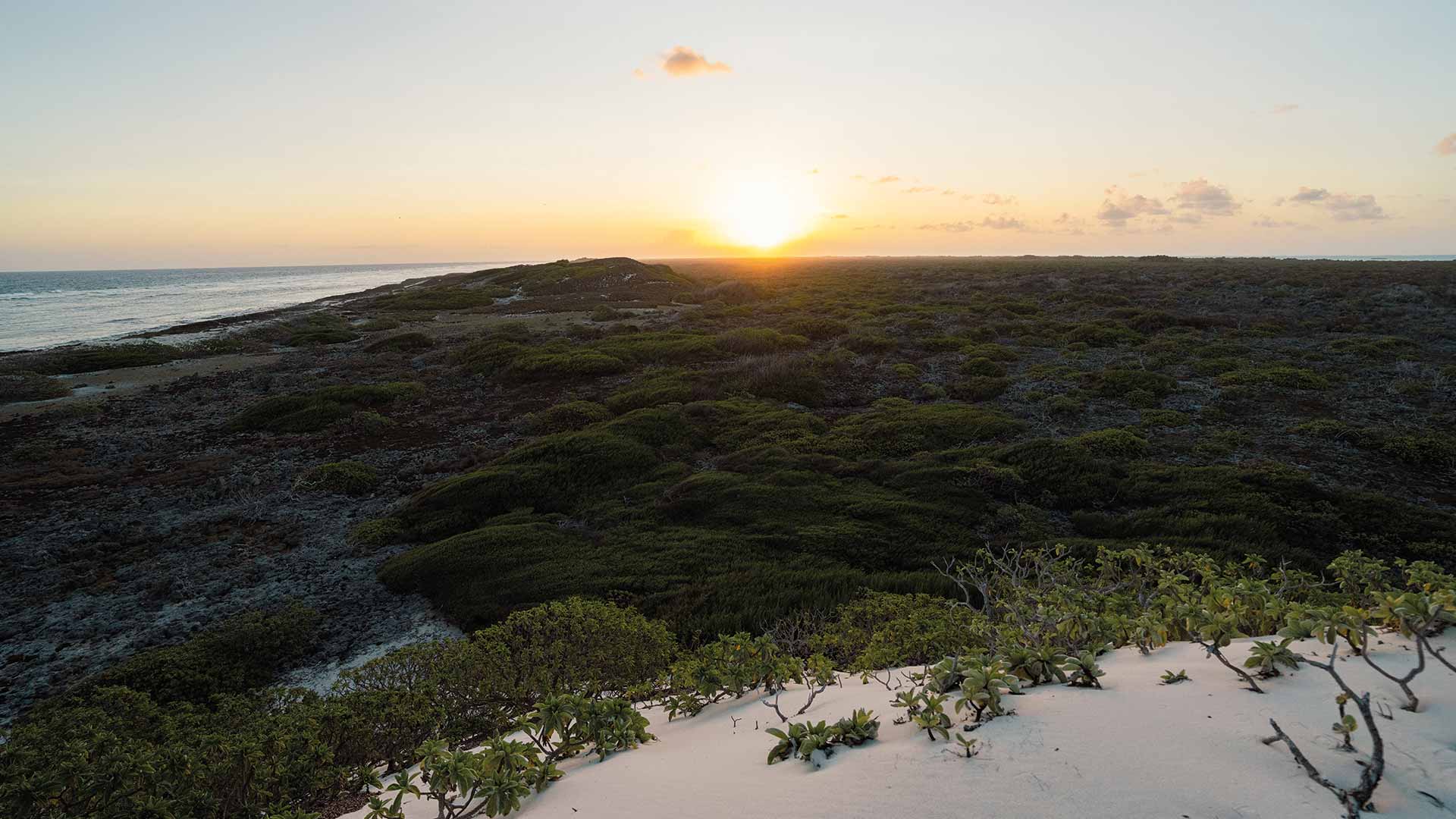
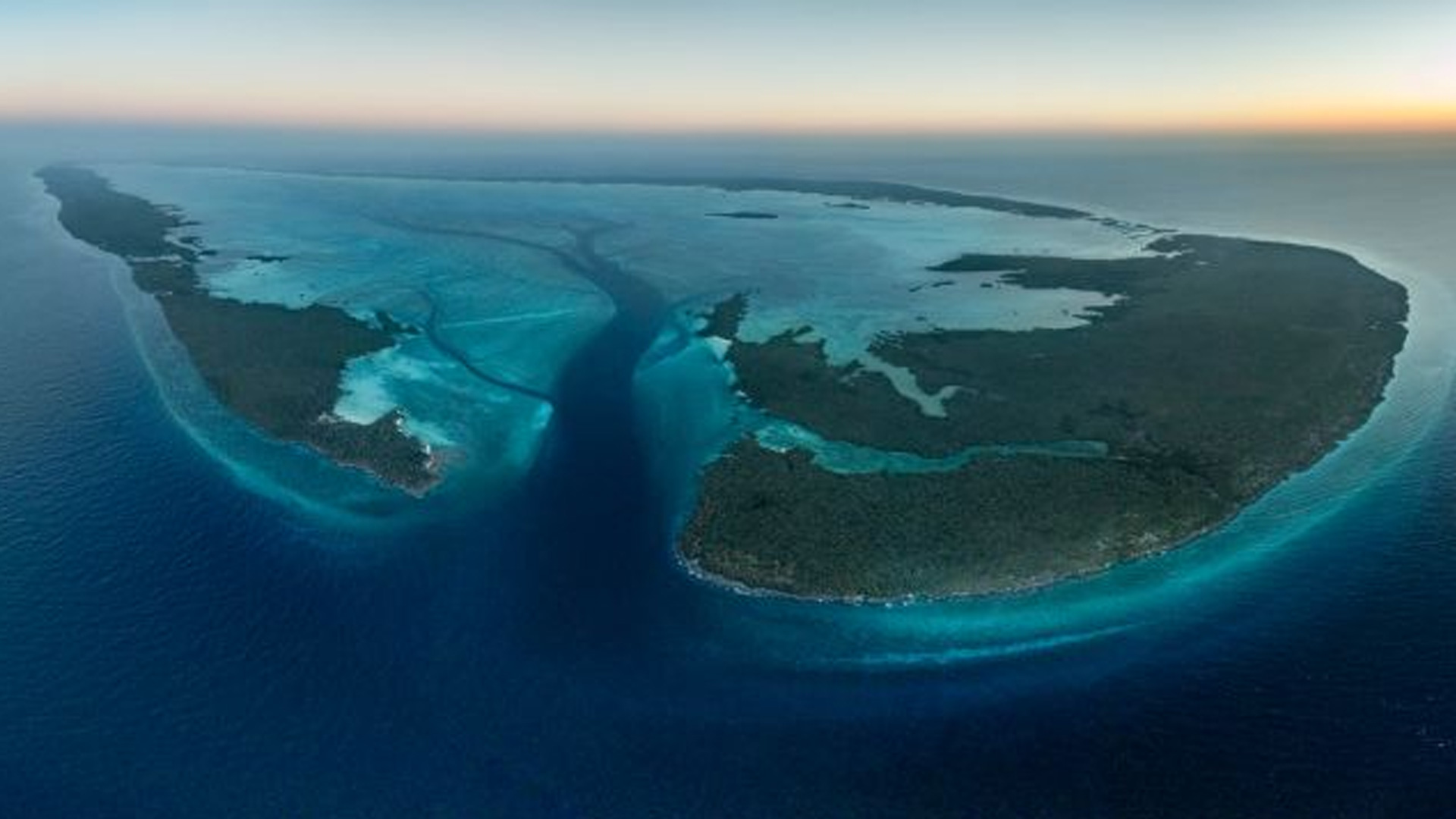
After waking, the Plastic Odyssey team decided to watch the sunrise from the top of the dune beside the DJL camp. Rising about twenty meters high, it is the atoll’s highest point. From up there, nature came alive in calm and color. Aldabra stretched out in every direction. The first light of day glowed orange and gold, as if the island were trying to seduce us.
On Aldabra’s southern coast, the wind never stops blowing. It rattled the tents all through the night, and on this Sunday morning, October 12, Aeolus still showed no mercy. The gusts reached 25, maybe 30 knots. Sand got everywhere, whipping against our faces. We would have to get used to it for the days ahead.
After waking, the Plastic Odyssey team decided to watch the sunrise from the top of the dune beside the DJL camp. Rising about twenty meters high, it is the atoll’s highest point. From up there, nature came alive in calm and color. Aldabra stretched out in every direction. The first light of day glowed orange and gold, as if the island were trying to seduce us. Back at camp, tortoises and coconut crabs were waking too, starting their morning squabbles over food scraps. After a hearty breakfast prepared by Yanick, hired as a refrigeration technician for the scientific base but serving as the cook for several weeks, Thibault and Simon finished packing. It was time to head east.
To reach Cinq Cases, the easternmost camp on the atoll, they would have to cross the lagoon once more, navigating again over the jagged karst zone with its knife-sharp rocks. The bags were heavy, and the operation was tricky. Among the gear carried on wooden pack frames were tents, mattresses, sleeping bags, and the Ecoflow, an eight-kilogram solar generator essential for charging the six drone batteries needed to complete the mapping of this part of Aldabra. The goal: to observe from above the areas where plastic waste had accumulated.
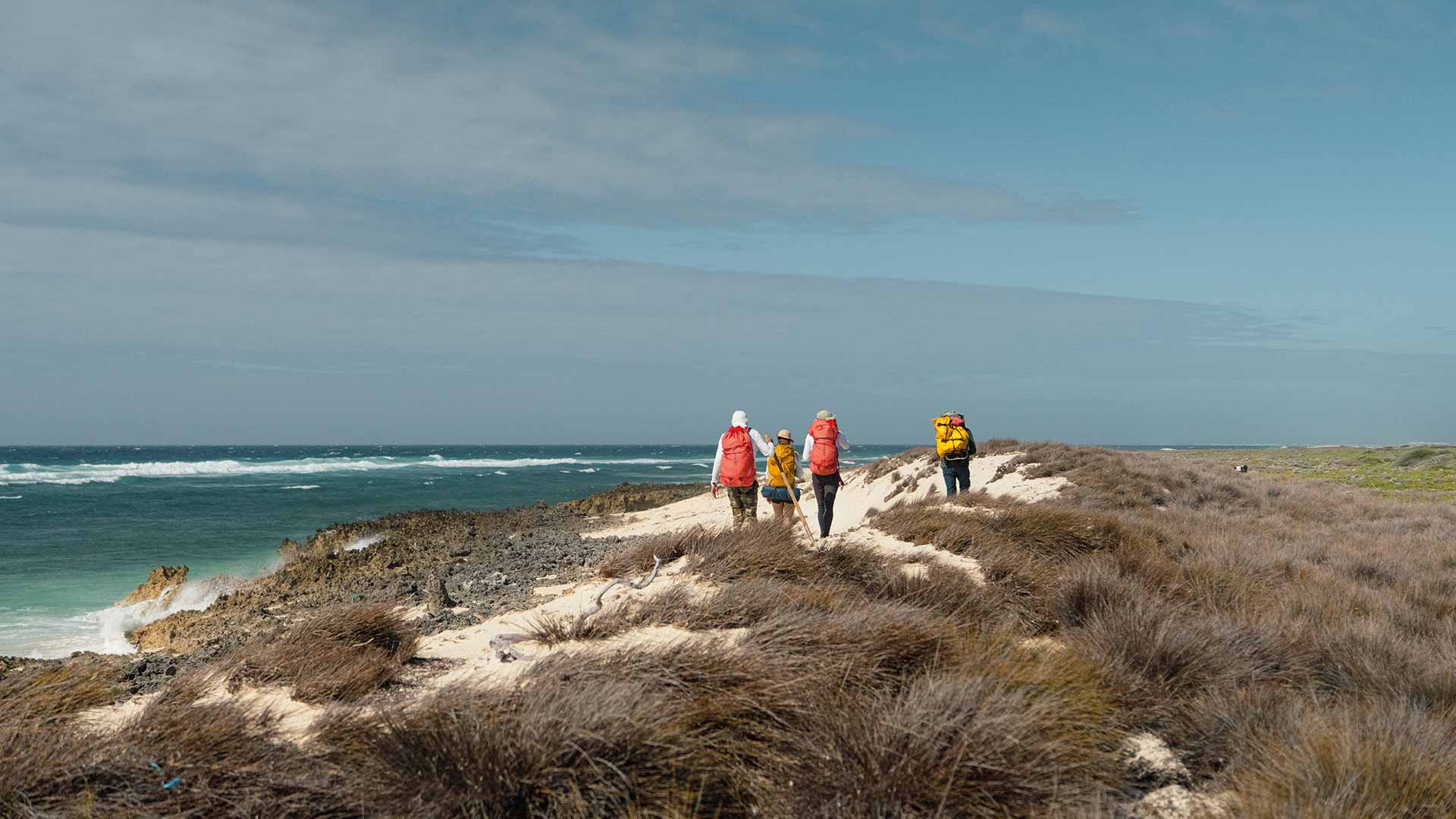
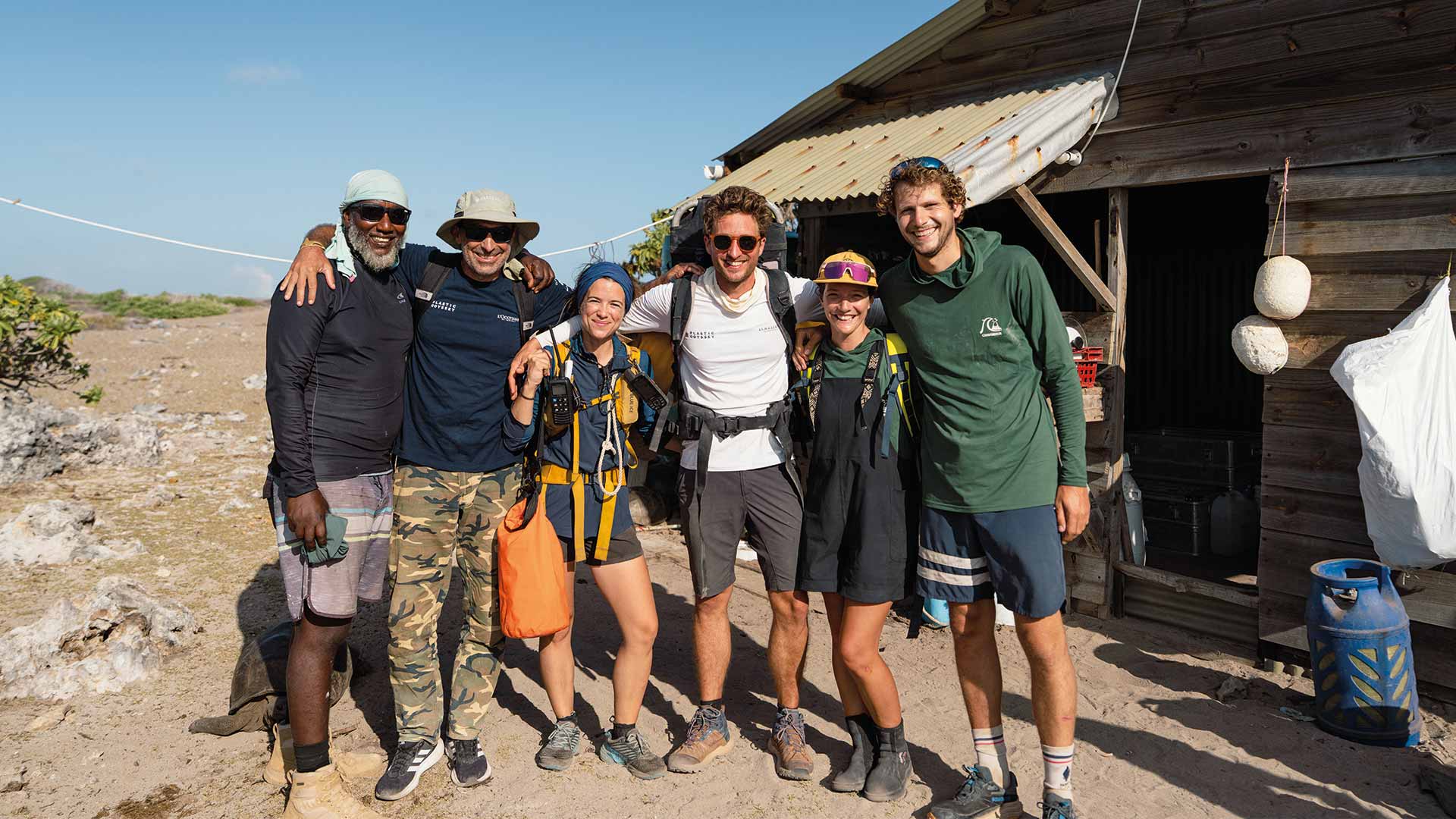
Francis, the atoll’s manager and a member of the Seychelles Islands Foundation (SIF), and Dino, a soldier from the special forces, joined Thibault and Simon for the mission. The trip across the lagoon took about thirty minutes. Once again, the scenery was breathtaking, a symphony of white, green, and every shade of blue. But vigilance was constant, for on such an isolated atoll, a single misstep could have serious consequences. As soon as the Plastic Odyssey members waded ashore, a leopard ray glided out from its hiding place to greet them. “It was swimming in very shallow water,” recalled Simon. “Farther on, we saw a trevally. We walked for ten minutes with water up to our knees, and then, for almost half an hour, we alternated between mud, clay, and razor-sharp stones. It was tough going. A single fall could have caused a bad injury. The ground was so slippery, and we didn’t have the right shoes.”
In a lunar landscape, the team followed yellow markings painted on rocks to find their way to Cinq Cases. It took nearly two hours to cover just four kilometers. Once there, Dino started cooking a Seychellois camp classic: rice, beans, lentil dhal, and tuna.
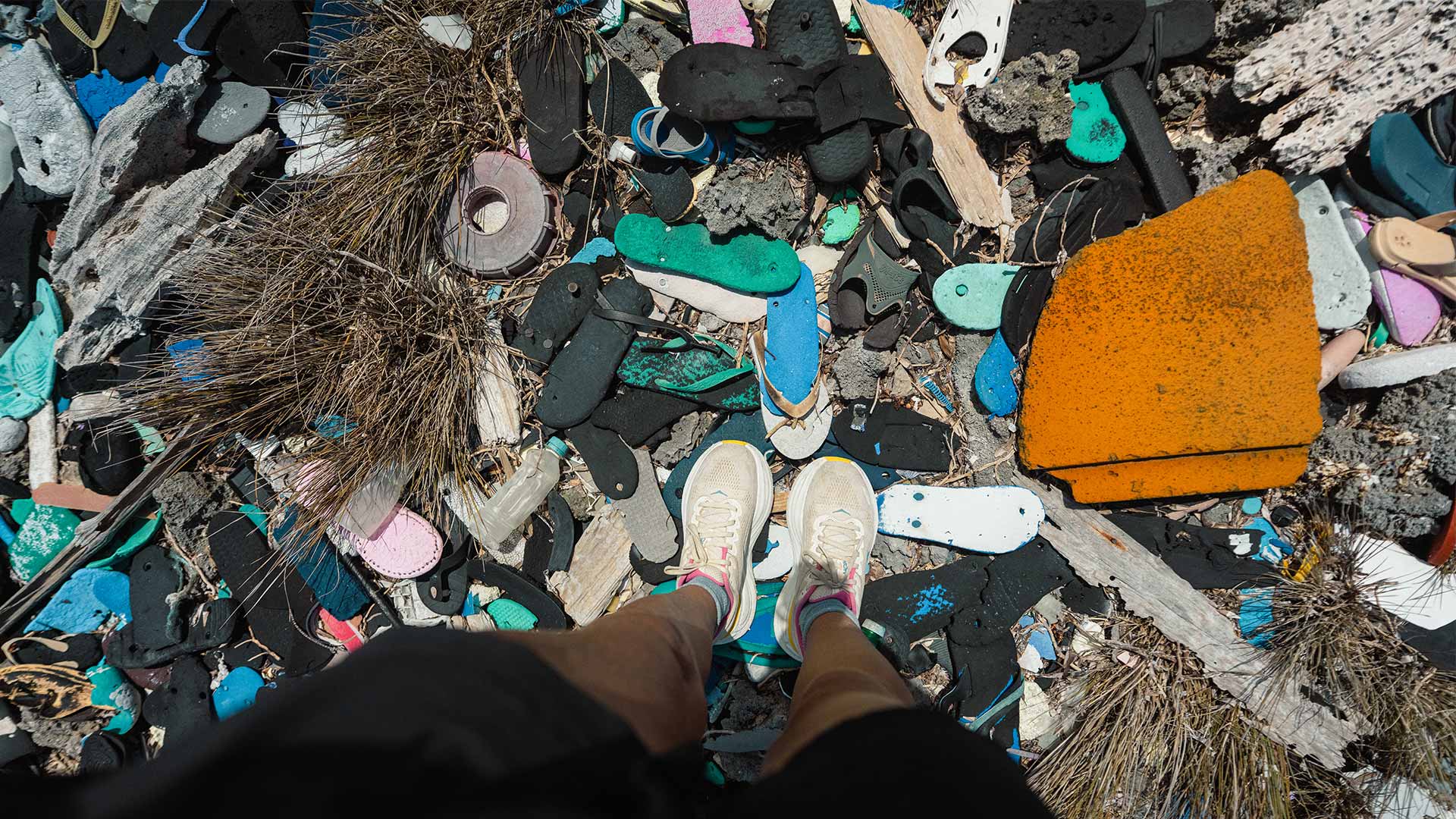
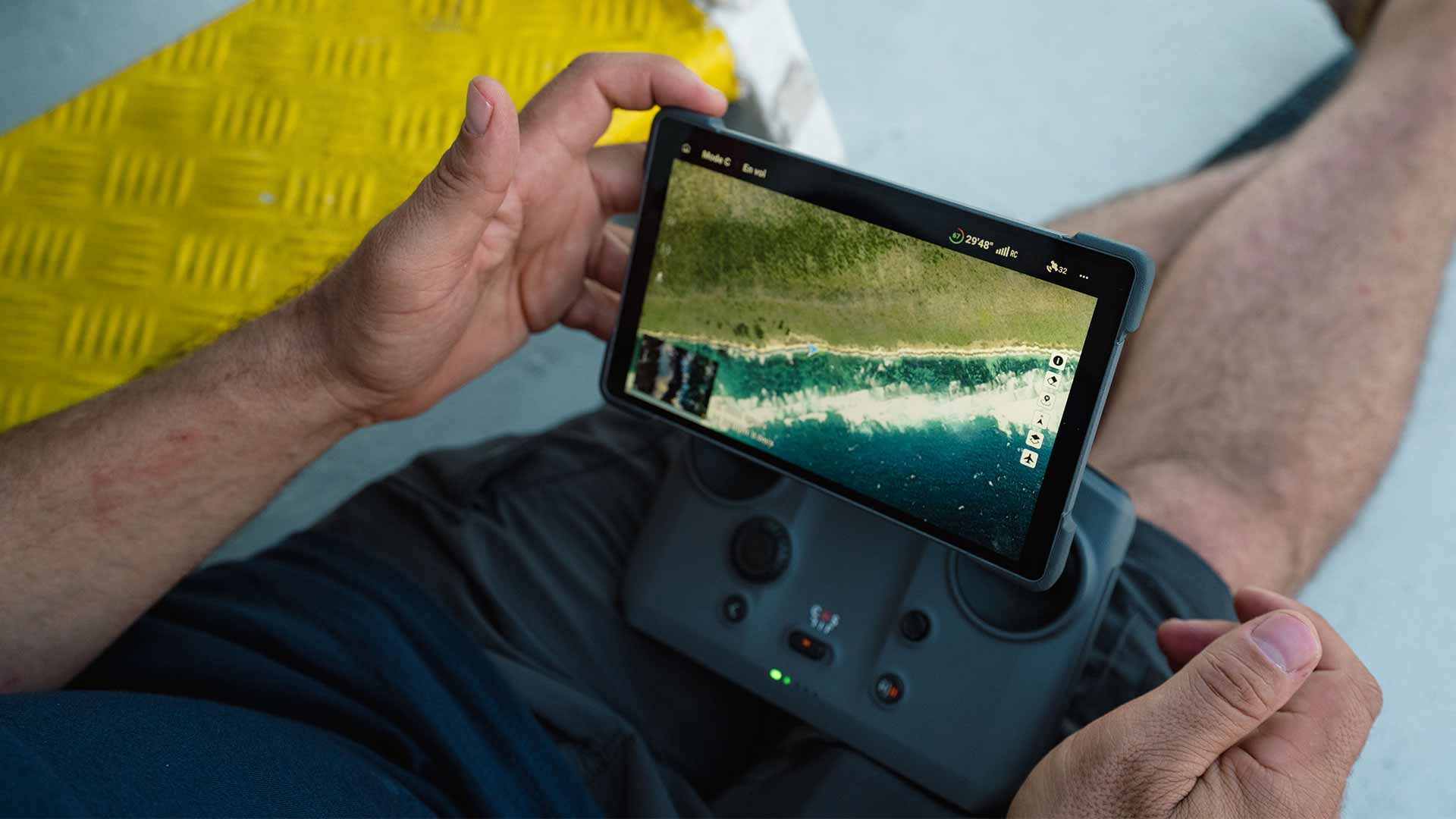
After a restorative nap, the team sent the drone flying around the hut. Around four o’clock, as the sun began its slow descent toward the west, Thibault and Simon set out on a reconnaissance mission toward the northeast point. They logged the GPS coordinates of several locations, taking photos and videos, sometimes to record plastic accumulations, other times to identify possible sites for future clean-up camps. “The unpleasant surprise is that there’s almost never direct access to the sea,” said Thibault. “There’s always that karst barrier between the coastline and the waves. There isn’t much waste here because it can’t easily pass the cliff. It’s like a natural wall. Only thousands of flip-flops, fishing buoys bouncing off the rocks, and a few nets make it through. We saw huge polystyrene buoys, about a meter and a half wide. They’re enormous.” Amid this desolate scene lay the remains of a stranded baby whale.
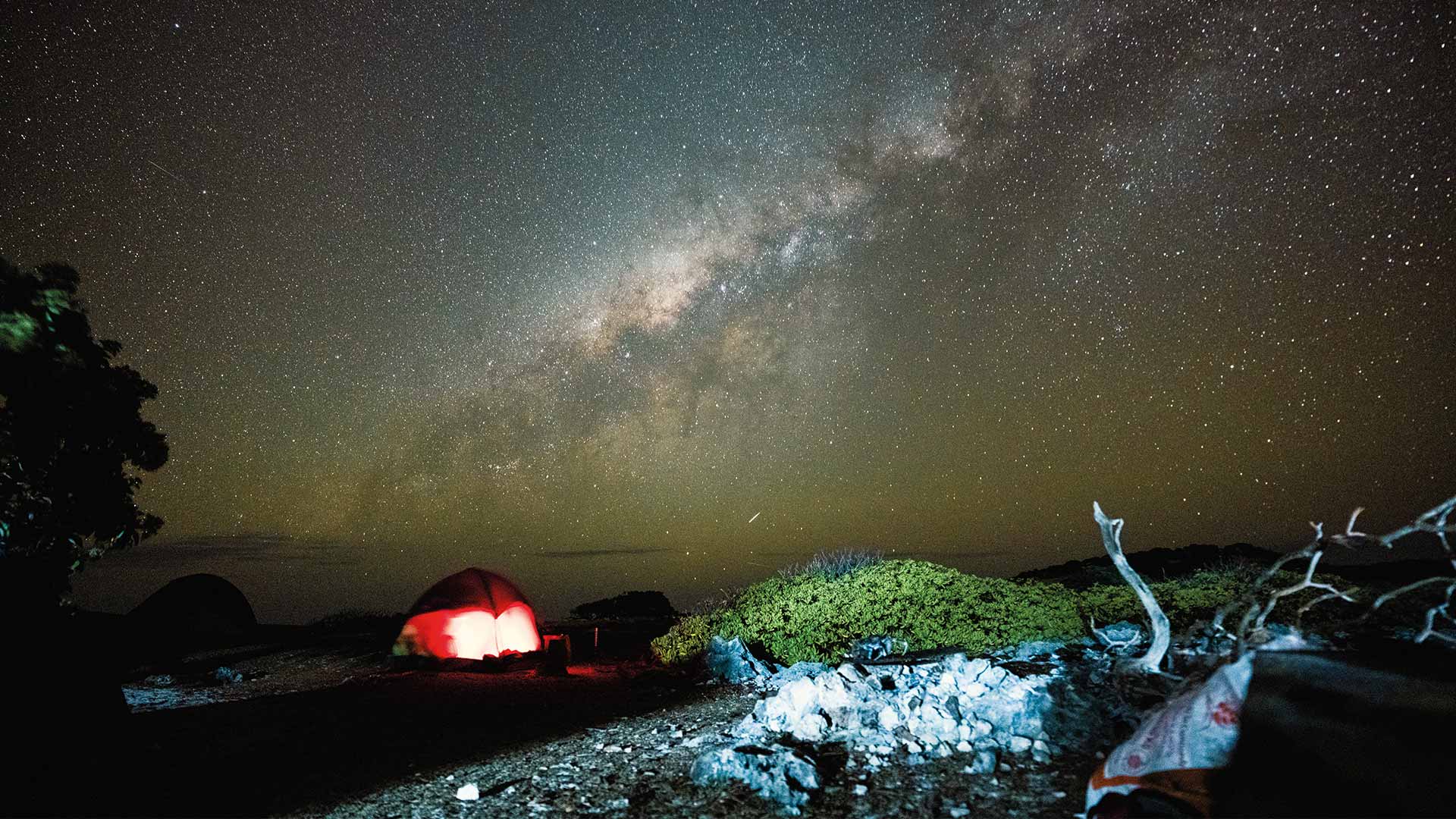
Back at the hut, Dino prepared dinner. He was in good spirits, having just recharged his phone with the Ecoflow. He now sat quietly, eyes fixed on his screen, watching a series. The Cinq Cases camp had three double bunk beds and plenty of mosquitoes. The Plastic Odyssey team decided to sleep in their tent instead. Inside, they could hear the crash of waves against the rocks and feel, for a moment, safely cut off from the world.
But inside their heads, the questions raced. How could they supply water to dozens of volunteers for weeks if the desalination unit refused to work? How could they move plastic waste over the karst rock? Would the debris even make it past the cliffs and breaking waves? How long could one endure in such a barren, isolated place? Over dinner, Francis explained that very few people had ever made it this far east on Aldabra. According to him, more people had stood on the summit of Everest than had set foot in this remote corner of the atoll.
Author: Pierre Lepidi, Senior Reporter at Le Monde
Other articles
Day 1: “Aldabra, here we go!”
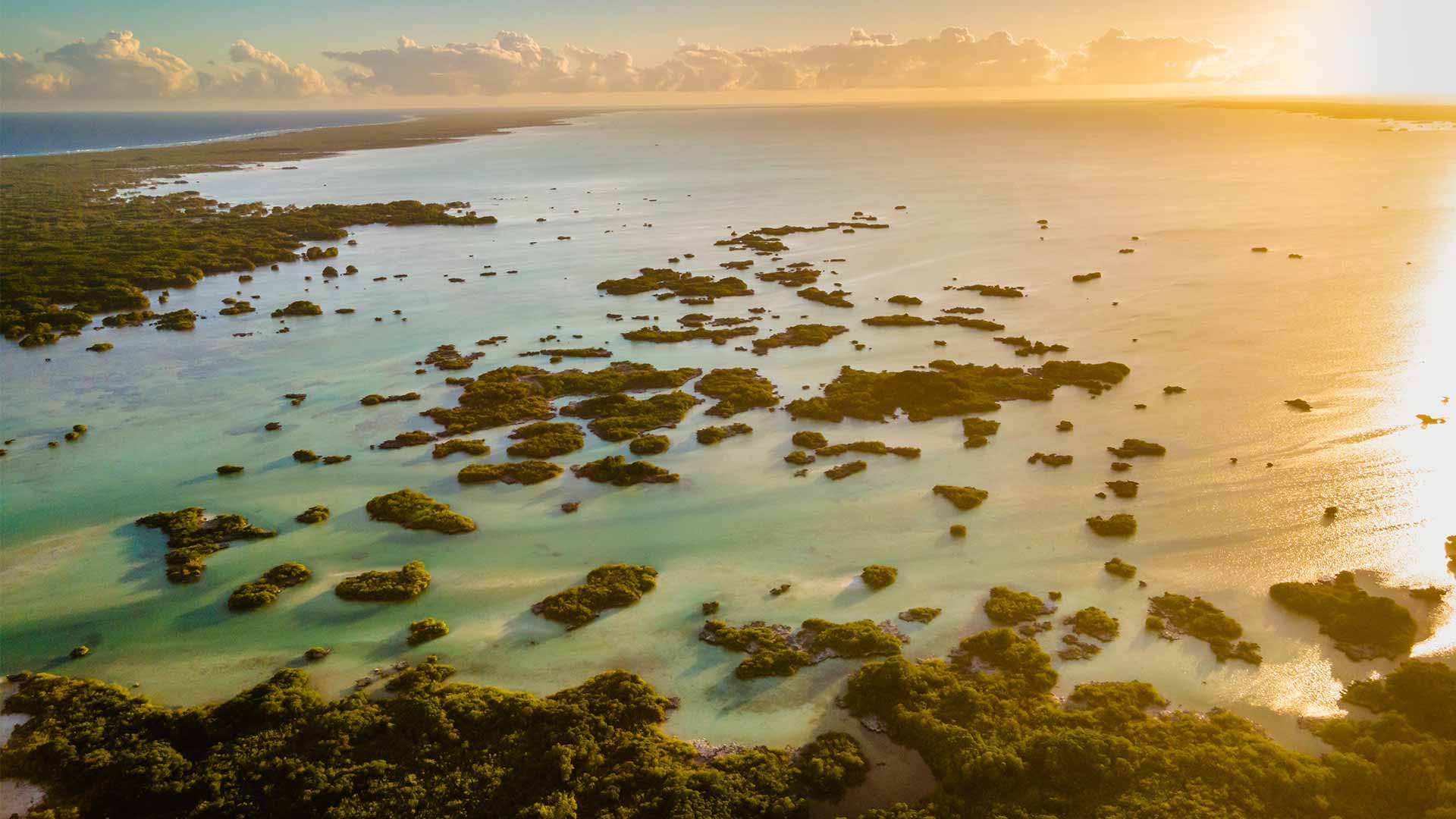
After spending a few hours at anchor off the Seychelles capital, the vessel set sail in the early afternoon. "Aldabra, here we go!" cheered Pierre-Louis, known to all as "Pilou", the second officer, as he sounded the ship’s horn. Under a cloudless sky, Plastic Odyssey first headed north along the coast of Mahé. Slowly, the island faded into the distance....
Day 2: “Aldabra is a paradise bristling against the invasion of man”
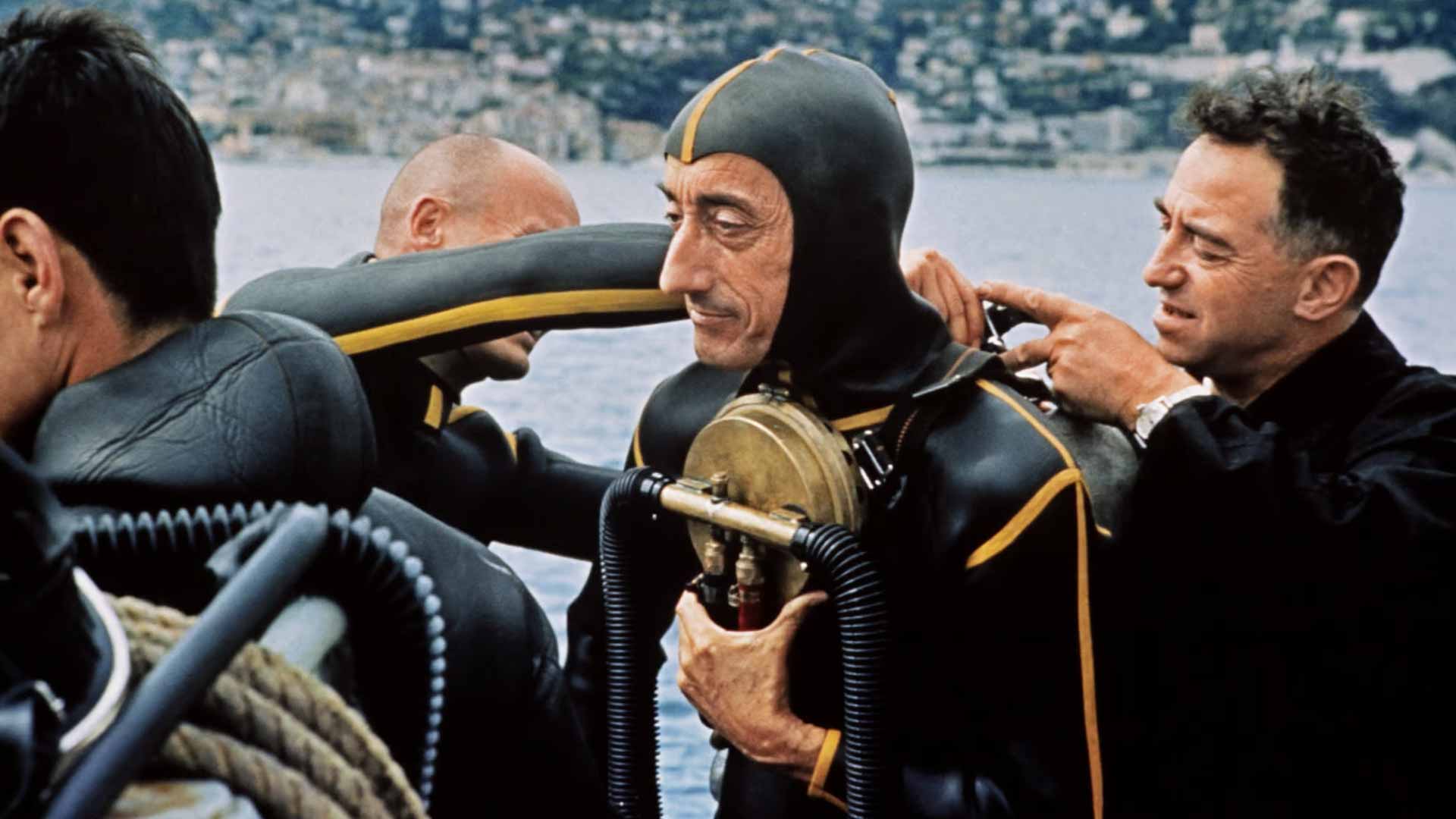
Aldabra has always inspired awe among those lucky enough to reach it. Yet its greatest defender was Commander Jacques-Yves Cousteau (1910–1997). Beyond revealing Aldabra’s coral beauty to the world, he made it his mission to protect it from the various forms of harm caused by humankind....
Day 3: Final preparations before landing on Aldabra
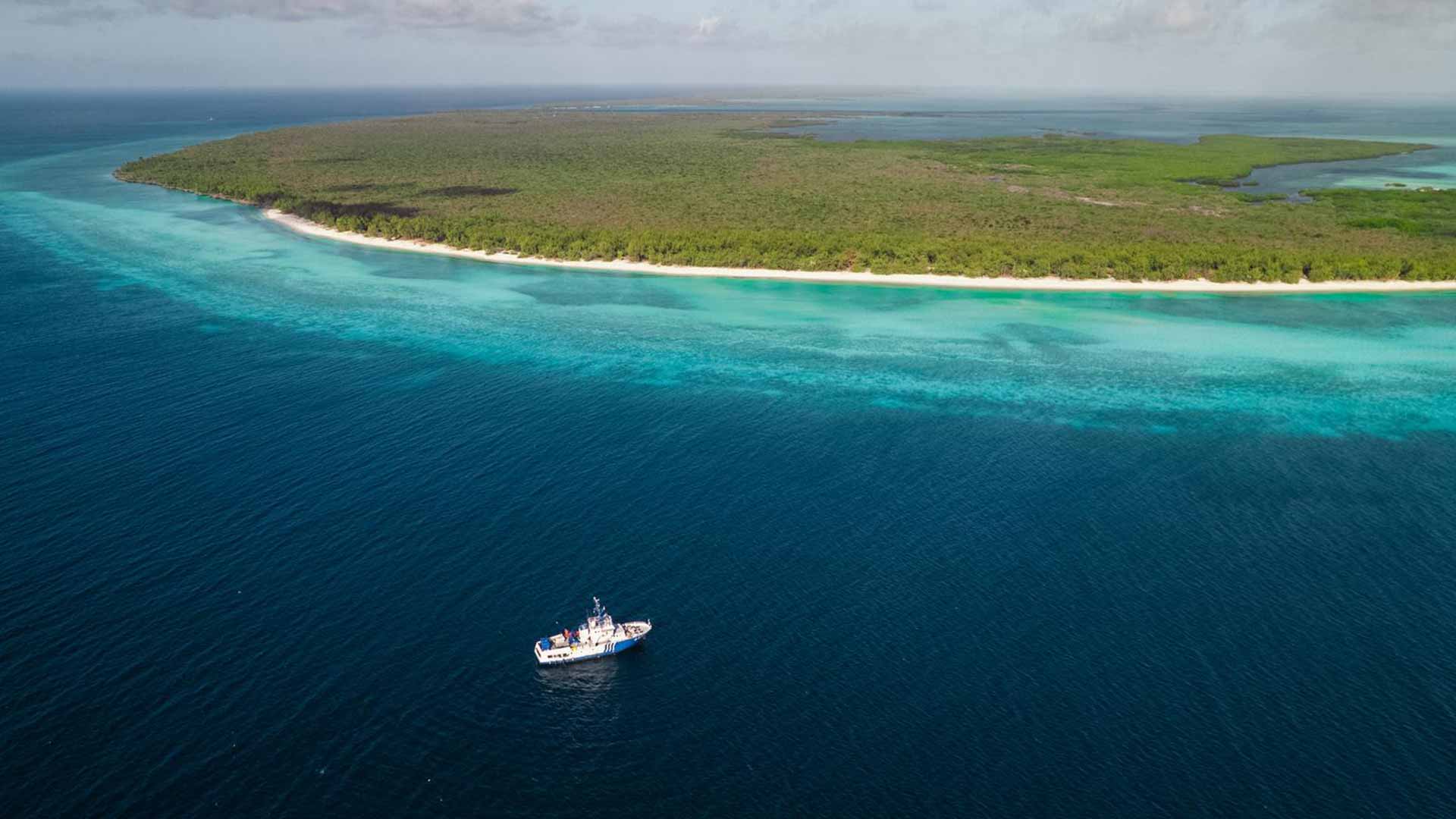
The vessel now moved to the rhythm of landing preparations, and nothing was left to chance. To protect biodiversity, the Seychelles Islands Foundation (SIF), the body responsible for regulating the atoll and issuing permits, requires that all equipment taken ashore on Picard Island be thoroughly cleaned of dust, sand, seeds, and soil....
Day 4: Aldabra, seen from the sky
One of Plastic Odyssey’s missions is to map the areas where 513 tons of plastic waste were recorded during a scientific expedition in 2020. Driven by the trade winds, these piles have accumulated along the southern and eastern shores of the atoll, over roughly fifty kilometers. Some of these zones, as satellite images show, are extremely difficult to reach....
Day 5: Aldabra, the challenge of water
The heat was oppressive, almost suffocating. The first challenge was to get the seawater desalination unit running to rehydrate. "Water is life. The first priority in any survival situation is always access to water," explained Thibault, engineer aboard Plastic Odyssey. Since there are no natural sources on Aldabra, the scientific team relies exclusively on filtered rainwater for their daily needs....
Day 6: East of Aldabra, a lunar landscape swept by the trade winds
After waking, the Plastic Odyssey team decided to watch the sunrise from the top of the dune beside the DJL camp. Rising about twenty meters high, it is the atoll’s highest point. From up there, nature came alive in calm and color. Aldabra stretched out in every direction. The first light of day glowed orange and gold, as if the island were trying to seduce us....
Day 7: Aldabra does not give itself away, It must be earned
To confront Aldabra is to endure the island’s harsh conditions, but every effort is rewarded. A meeting with a tortoise, a sunset, a breathtaking landscape, the island gives back to those who care for it. But it never gives itself easily. It must be earned....
Day 8: Aldabra asks to be protected
Night had fallen. A dozen tortoises surrounded us. Almost naively, I asked Francis, the island's manager, what message Aldabra might want to send to the world. "It would be a cry from the heart," he said. "I am unique. Protect me."...
Day 9: Life Among Aldabra’s Giant Tortoises
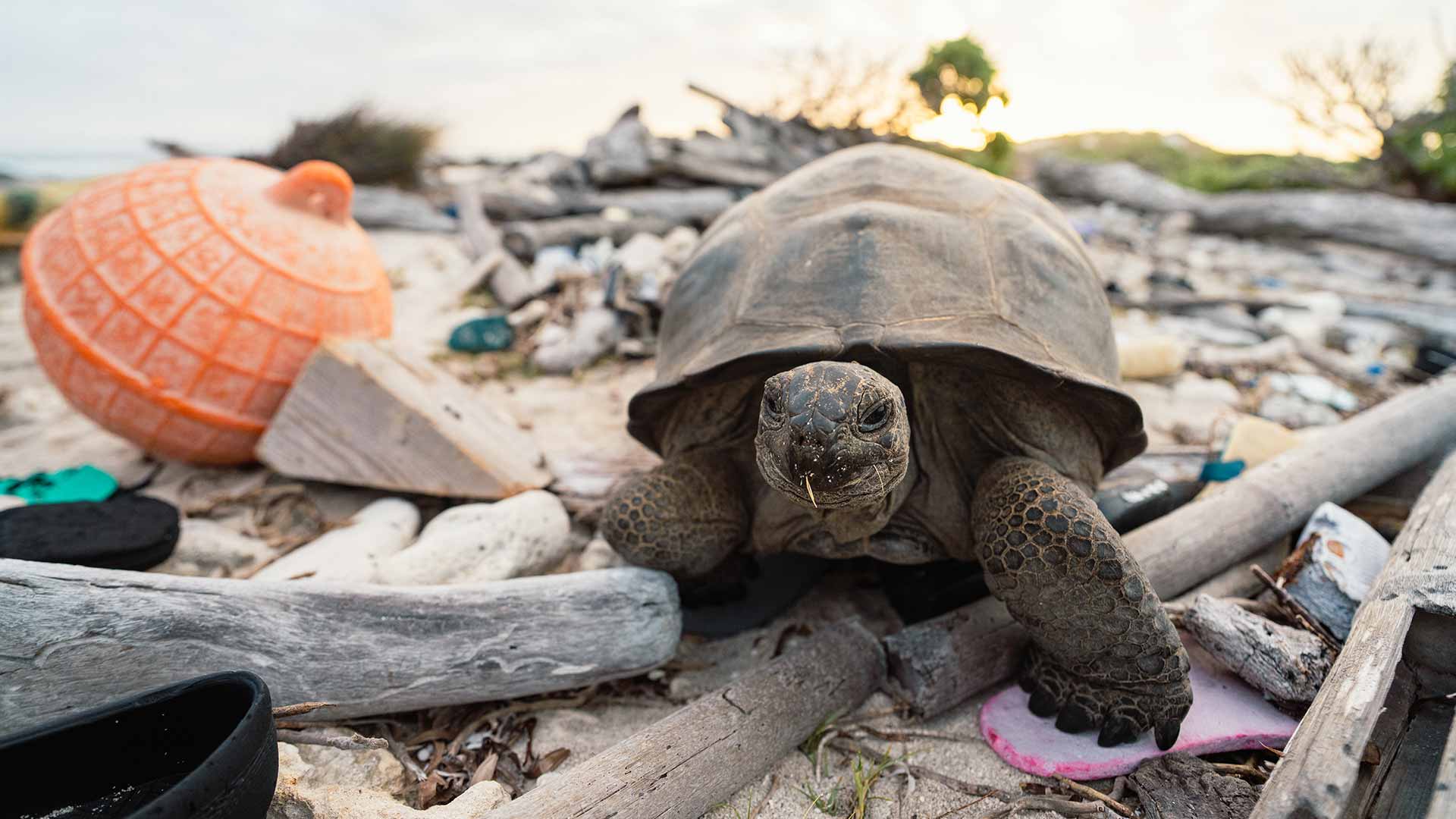
The sea turtle reaches the plastic debris: she skirts a fishing buoy, crushes a plastic bottle. Farther on, a tire, a few jerrycans, some sandals. Watching her struggle through this apocalyptic landscape feels unreal, deeply moving....
Day 10: Mission accomplished for Plastic Odyssey on Aldabra
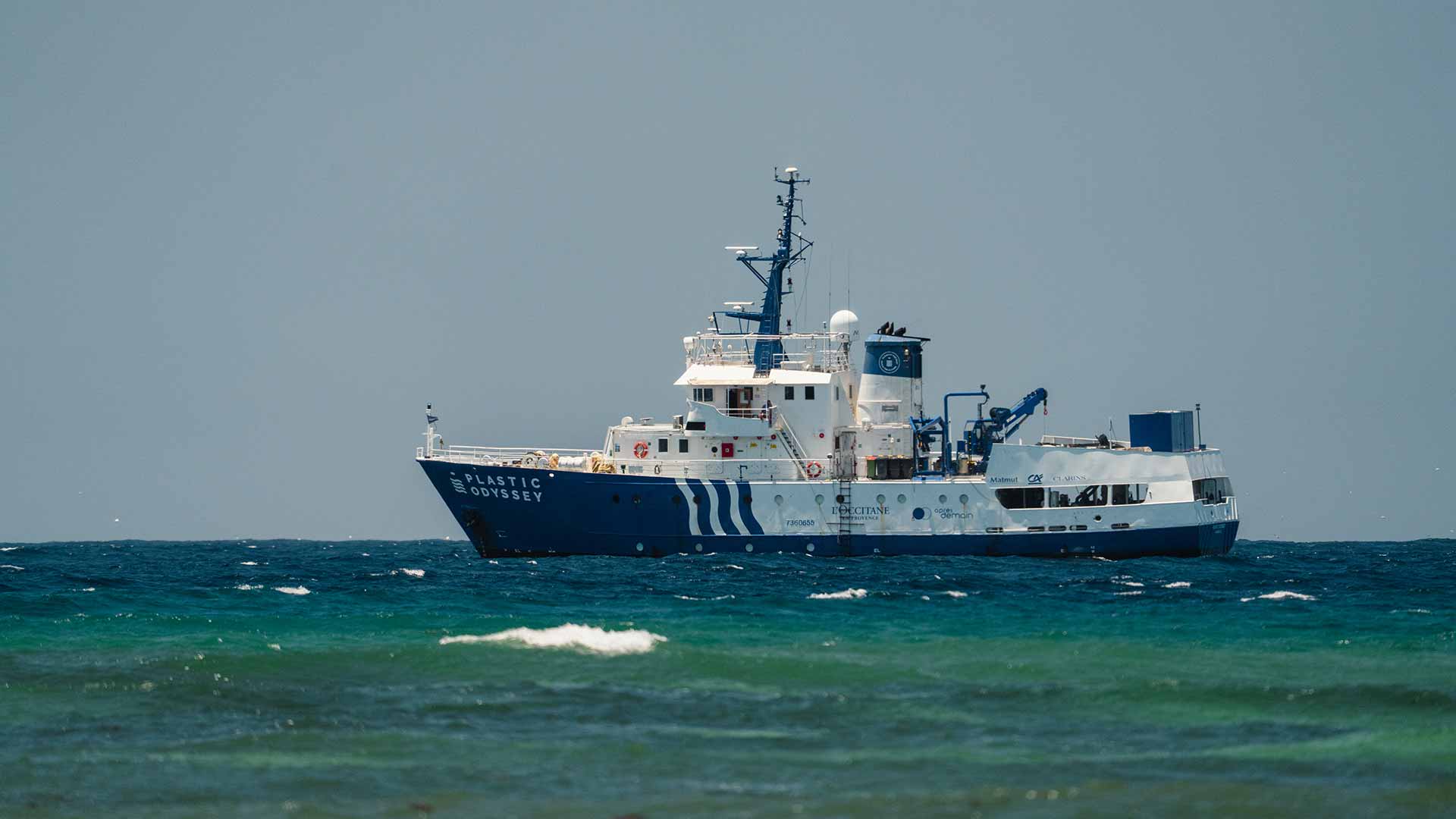
The Plastic Odyssey is expected off Dune Jean-Louis at 10 a.m. to test the extraction of half a ton of plastic waste using a floating platform made of jerrycans. The barge will shuttle between the vessel and the shore. But the sea is rough, and the wind is strong. Will the extraction be possible? Tension and uncertainty fill the air....